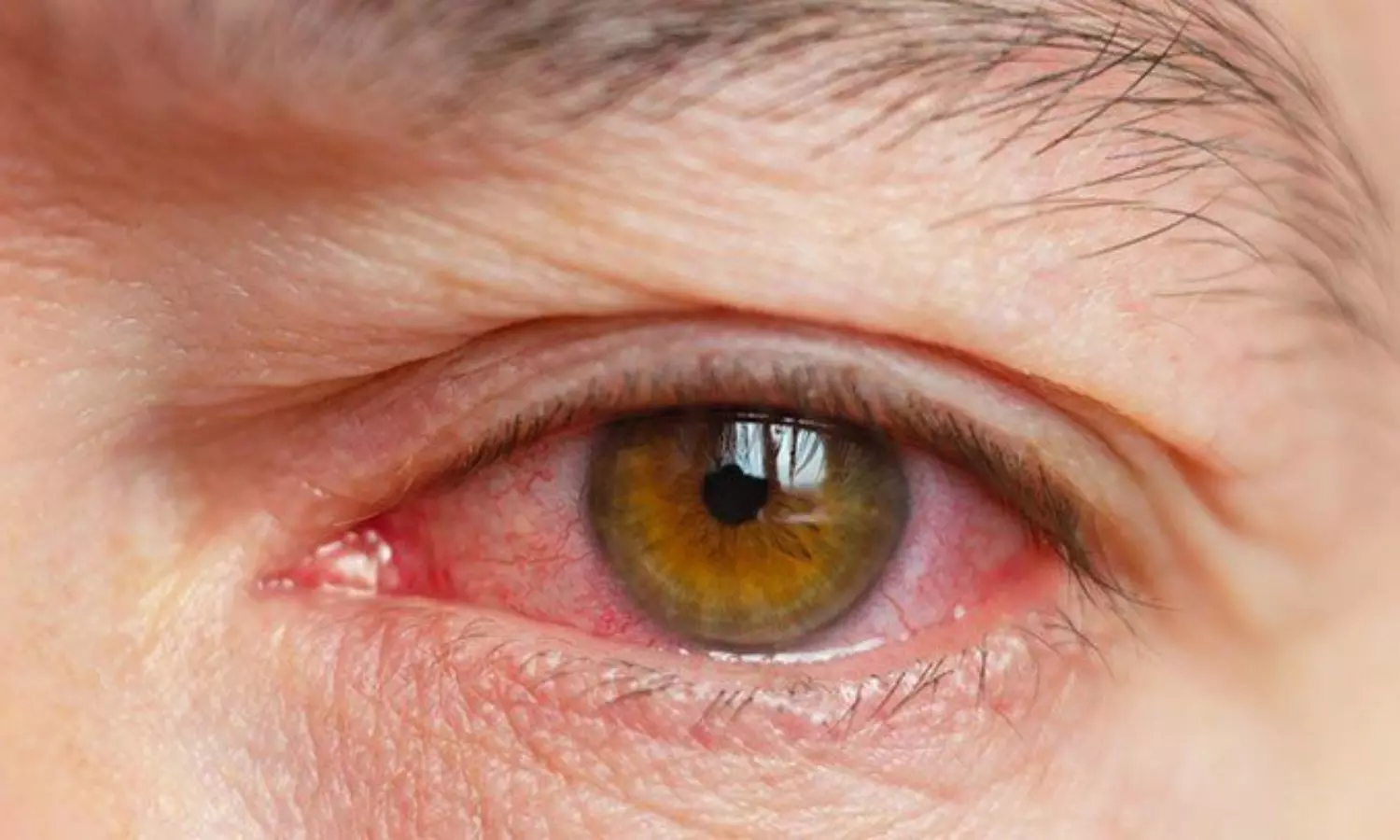
USA: A large cohort study published in the American Journal of Ophthalmology suggests that adults with vitamin D deficiency may face a higher risk of developing Dry Eye Disease compared with those who have adequate levels of the nutrient. The findings indicate that low vitamin D status could represent a potentially modifiable factor linked to this common ocular condition.
Dry eye disease is a frequent ocular surface disorder that can cause irritation, visual disturbance, and reduced quality of life. Increasing evidence suggests that nutritional factors may influence ocular surface health. Vitamin D, known for its anti-inflammatory and immune-regulating properties, has been proposed as one factor that may support ocular surface integrity. However, large population-based studies exploring its relationship with dry eye disease have been limited.
To examine this association, researchers led by Shon B. Shmushkevich from the Bascom Palmer Eye Institute at the University of Miami Miller School of Medicine conducted a retrospective cohort analysis using electronic health records from the TriNetX U.S. Collaborative Network. The dataset included records spanning nearly two decades, from September 2005 through September 2025.
The investigators analyzed records of adults aged 18 years and older to determine whether vitamin D deficiency was linked to the development of dry eye disease. After applying propensity score matching to balance age, sex, and relevant health factors, the study compared more than 6 million adults with vitamin D deficiency and an equal number of matched individuals without the deficiency. The average age in both groups was about 50 years, and women made up roughly two-thirds of the participants.
The primary outcome was the occurrence of newly diagnosed dry eye disease. Participants were followed for a median period of more than three years to evaluate long-term risk patterns between the groups.
The key findings were as follows:
During follow-up, 3.3% of individuals with vitamin D deficiency developed Dry Eye Disease compared with 2.7% of those without the deficiency.
Vitamin D deficiency was associated with a 28.6% higher risk of developing dry eye disease.
The association remained statistically significant across multiple measures, including hazard ratios, risk ratios, and odds ratios.
Individuals with vitamin D deficiency showed a progressively increasing cumulative incidence of dry eye disease over time.
The difference in incidence between the deficient and non-deficient groups widened over 1, 5, 10, and 20 years of follow-up.
Researchers noted that assessing vitamin D levels in patients with Dry Eye Disease may be clinically useful. Correcting the deficiency could support standard treatment, although supplementation should follow general medical guidelines rather than serve as a standalone therapy.
The study had limitations, including reliance on diagnostic codes instead of laboratory vitamin D measurements or standardized dry eye tests. Data on factors such as medications, autoimmune disorders, screen exposure, and vitamin D supplementation were also incomplete. Additionally, the retrospective design prevents establishing a causal relationship.
Overall, the findings suggest a potential link between vitamin D deficiency and increased risk of dry eye disease, highlighting the need for prospective studies to confirm the association.
Reference:
Shmushkevich, S. B., Bajrami, S., Beauchamp, B., Kane, J. S., Mutawe, D. L., Hollinger, J. C., Marks, V. A., Parekh, P. K., Rothman, A. L., Ansari, Z. A., Williams, B. K., & Galor, A. (2026). Vitamin D Deficiency and Dry Eye Disease: A Retrospective Cohort Study. American Journal of Ophthalmology. https://doi.org/10.1016/j.ajo.2026.02.036
