South Africa’s recovery from 20 for 3 to 187 in a pressure game says a few uncomfortable things about India’s bowling balance and depth. On a surface that demanded sustained pressure through the middle overs, India leaned heavily once again on the brilliance of Jasprit Bumrah and Arshdeep Singh. The rest of the attack struggled to maintain control or create sustained pressure. At this level, over-dependency is a luxury no team can afford in knockout cricket.
The selection call of Washington Sundar over Axar Patel neither added variety to the bowling nor depth to the batting. In sudden-death games, teams need specialists who bring clear, proven roles. Axar’s left-arm spin and lower-order power-hitting offer dual value in pressure scenarios. Washington, on this occasion, appeared to be a compromise pick rather than a tactical one. In crunch matches, clarity of selection is as important as skill execution.
South Africa, on the other hand, showcased why they remain one of the most dangerous white-ball sides when their middle order gets going. After early damage, their recovery was anchored by a strong, experienced core. David Miller’s proficiency in this format stood out once again. He understands the rhythm of T20 cricket — when to absorb pressure, when to counter-punch, and when to launch. His ability to assess bowlers and target specific match-ups ensured that what looked like a below-par total midway through the innings turned into a fighting, competitive score.
India’s response with the bat was muted and tentative. The top-order failure exposed a recurring vulnerability in high-pressure matches. Early wickets not only stall momentum but also force the middle order into rebuilding mode, which is rarely ideal in a chase of this magnitude. The high speeds and hostile lengths of South Africa’s fast bowlers unsettled India’s stroke-makers, while Keshav Maharaj’s disciplined lines into Shivam Dube’s hitting arc smartly closed down one of India’s key scoring avenues.
What made the chase unravel faster was the lack of partnership-building in the middle overs. In T20 cricket, powerplay aggression is important, but knockouts are won in the 7–15 over phase. South Africa controlled that window expertly, squeezing runs and forcing risk. The result was a chase that looked competitive on paper but increasingly one-sided in execution.
As mentioned earlier in the tournament, Rinku Singh’s lack of time in the middle is a quiet concern. When he finally gets an opportunity in a high-stakes scenario, the mountain to climb is often too steep. At the Narendra Modi Stadium, he walked in with too much tear to stitch. Finishers thrive on rhythm and repetition; coming cold into pressure situations is an unfair ask, even for someone with Rinku’s temperament and hitting range.
The larger lesson for India is this: sudden-death games create a different psychological environment compared to league matches. In league phases, there is room for recovery, experimentation, and off-days. In knockouts, every ball carries consequence. Skills remain the same, but temperament is tested under a different lens. Decision-making, selection clarity, and composure under stress become decisive.
India’s squad has the talent and firepower to go deep in this tournament. But the business end is unforgiving. Over-reliance on a couple of bowlers, uncertain role clarity in selection, and a fragile response to early batting pressure are fault lines that elite opponents will target relentlessly.
At this stage of a tournament, the conversation must shift from potential to execution. Because in Super 8s and beyond, reputations don’t win matches — temperament does.
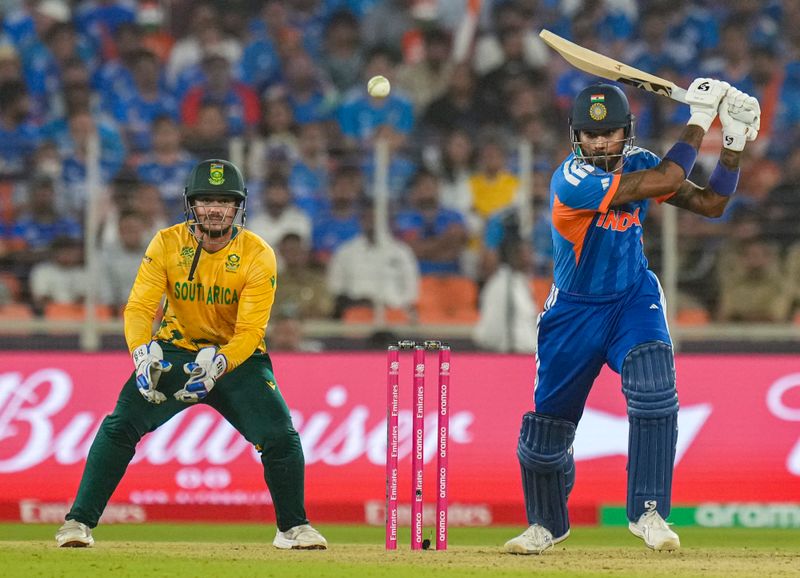
Sudden death, sudden lessons: India’s reality check against South Africa
