When principle collided with power, and a nation’s cricket paid the cost.
There are moments in cricket when the scorecard becomes irrelevant, when the contest is no longer between bat and ball but between principle and power.
Bangladesh’s decision to withdraw from the forthcoming World Cup is one such moment — a decision shaped not on the field of play, but in the uneasy corridors where politics, pride, and governance intersect.
The story did not begin with a fixture list or a security advisory. It began quietly, with the removal of Mustafizur Rahman from the Kolkata Knight Riders squad. Official explanations were sparse, wrapped in familiar administrative language that concealed more than it clarified. In Dhaka, the decision was not interpreted as routine. It was seen as political, punitive, and symbolic. And in cricket, symbolism carries weight long after press statements have faded.
The Bangladesh Cricket Board (BCB) responded not with diplomacy, but with defiance. It announced that their team would not play World Cup matches in India, citing concerns over player safety. Perhaps those concerns were genuinely held; perhaps they were also a shield for protest. The truth may lie somewhere in between. But the larger reality was clear: cricket had once again been drawn into a conflict not of its making.
Pakistan soon aligned itself with Bangladesh’s stance, offering support that was as political as it was fraternal. The issue was placed before the ICC board — that modern chamber where ideals often sit uncomfortably beside interests. When the vote was taken, only two boards supported Bangladesh’s request for accommodation. The message was unambiguous: conform to the tournament structure, or withdraw. The BCB chose withdrawal.
The consequences of that choice will not be symbolic. They will be tangible and lasting. Financial loss will follow. Influence within ICC corridors will diminish. Future tour negotiations will occur with reduced leverage. In the contemporary cricket economy, moral victories do not pay broadcast rights, and isolation carries a heavy cost.
There is an uncomfortable truth that must be acknowledged without evasion. India today is the financial heartbeat of world cricket. Its market sustains the game’s prosperity; its commercial gravity shapes global decision-making. With financial power comes influence, and with influence comes compliance. Boards often align not out of conviction, but necessity. It is neither noble nor ignoble. It is simply the ecosystem in which modern cricket exists.
In such an environment, smaller boards must calculate with care. The BCB, in allowing emotion to override pragmatism, may have exposed its own cricketers to the harshest outcome. It is the player, not the administrator, who loses the World Cup stage. It is the supporter, not the politician, who loses the joy.
There is, too, a quiet historical irony in this episode. Asian cricket was once peripheral to power. Decisions were shaped in London and Melbourne with scant regard for voices from Karachi, Colombo, or Kolkata. Tours were dictated, influence rationed, and respect unevenly distributed. Asian teams were often treated as guests in a game they played with equal passion.
That era has passed. The axis of power has shifted. The financial centre of gravity has moved eastward. The circle has turned full. Those once excluded sit at the centre of authority; those once dominant must now negotiate. But power, wherever it resides, rarely behaves gently.
The sadness here is not that Bangladesh chose to take a stand. Institutions must, at times, defend their dignity. The sadness lies in the absence of foresight. Courage, when unaccompanied by strategy, can become self-inflicted damage.
One cannot help but think of the Bangladeshi cricketer — the young batter practicing late into the evening in Mirpur, dreaming of a World Cup hundred; the fast bowler pushing through exhaustion with hopes of hearing his anthem on the grandest stage. Those dreams do not belong to boardrooms. They belong to the field. And it is on that field that the loss will be most keenly felt.
Cricket has always claimed a higher calling. It speaks of spirit, honour, and the idea that the game is greater than any one player or nation. Yet it is also shaped by economics, influence, and governance. These realities coexist uneasily, colliding most visibly in moments such as this.
Bangladesh’s absence will be recorded in administrative minutes and debated endlessly across studios and columns. But its deeper meaning lies elsewhere. It stands as a reminder that in modern cricket, principle must walk alongside pragmatism; and that protest without preparation can cost a generation its opportunity.
History will decide whether the BCB acted with courage or miscalculation. For now, the silence created by their absence will speak loudly enough.
And the game, as it always does, will move on — perhaps diminished, certainly reflective, but enduring.
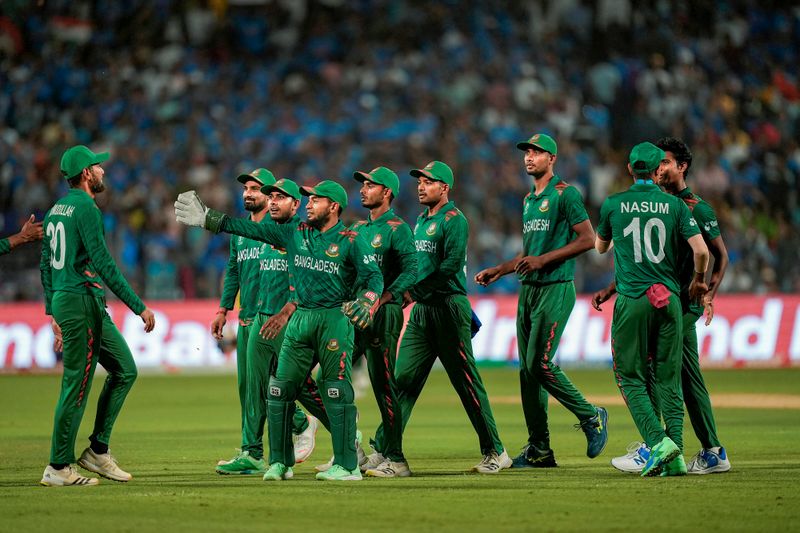
Beyond the boundary: Bangladesh’s withdrawal and the price of defiance
